SEO Benefits and Strategies for Real Estate Agents

Real estate professionals now need to learn SEO (Search Engine Optimization) since more and more buyers and sellers are using the internet for their real estate requirements. Whether you’re a seasoned professional or just getting started, you may close more deals by attracting more leads, increasing your online exposure, and using effective SEO strategies.
Introduction: The Importance of SEO for Real Estate Agents
SEO, or Search Engine Optimization, is the process of optimizing your online content so that search engines like Google can easily find, understand, and rank it. SEO for Real Estate is not just a digital marketing tool it’s a crucial component of your business strategy. By optimizing your website and content for search engines, you increase the likelihood of appearing at the top of search results when potential clients look for properties or real estate services in your area. This increased visibility can lead to more traffic to your website, more inquiries, and more opportunities to convert visitors into clients.
Benefits Of SEO For Real Estate Businesses
- Increased Online Visibility: With proper SEO, your real estate agent website can rank higher on search engines, making it easier for potential clients to find you. This is especially important as more people search online for real estate services.
- Targeted Traffic: SEO helps you attract the right audience by optimizing your content with relevant keywords like “real estate SEO,” “real estate lead generation,” and “real estate digital marketing.” This ensures that the people who visit your site are genuinely interested in your services.
- Cost-Effective Marketing: Compared to traditional advertising methods, SEO is a cost-effective way to generate leads and build your brand online. Once your website is optimized, it can continue to attract traffic without ongoing costs.
- Competitive Advantage: Many real estate agents still rely on outdated marketing techniques. By adopting SEO, you can gain a competitive edge in a crowded market, reaching clients your competitors might miss.
Basic SEO for Real Estate Agents
To utilize the full power of SEO, it’s essential to understand the basics. These include keyword research, on-page SEO, and off-page SEO each playing a critical role in your overall strategy.
Keyword Research and Optimization
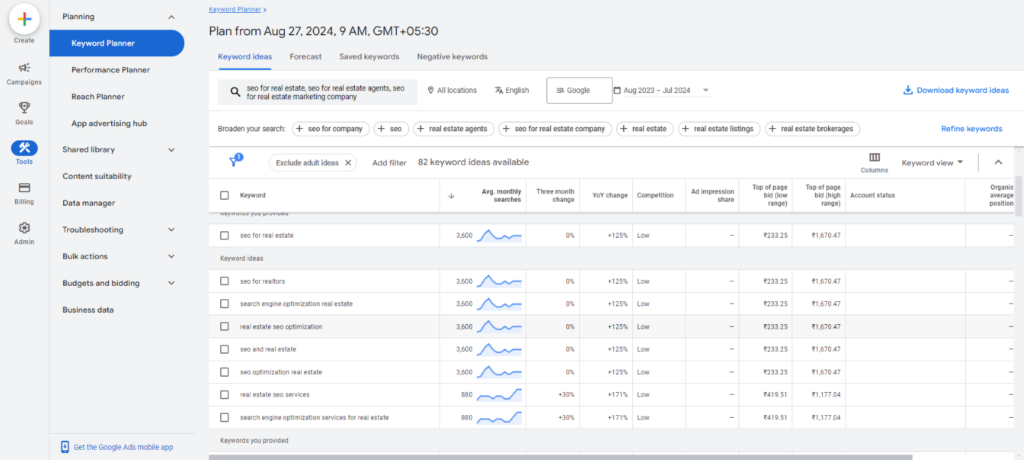
Keyword research is the foundation of any successful SEO strategy. It involves identifying the terms and phrases potential clients use when searching for real estate services online. Tools like Google Keyword Planner, Ahrefs, or SEMrush can help you find high-volume, low-competition keywords related to real estate.
For instance, targeting keywords like “how to improve real estate SEO” or “best SEO practices for real estate agents” can attract agents looking for digital marketing tips. On the other hand, local keywords such as “SEO tips for real estate agents in [city, state]” or “real estate marketing strategies for a small business” can help you dominate your local market.
Google Keyword Planner
Ahrefs

On-Page SEO
On-page SEO refers to optimizing individual pages on your website to rank higher in search results. This involves several elements:
- Title Tags: Include your primary keyword (e.g., “real estate SEO”) in the title of your blog posts or pages. Make sure it’s compelling and informative to encourage clicks.
- Meta Descriptions: These are summaries of your content that appear in search results. Use them to highlight the value of your content and include relevant keywords.
- Header Tags (H1, H2, H3): Use header tags to structure your content. Search engines use these tags to understand the hierarchy of your content. Make sure your primary keyword appears in at least one header.
- Content Optimization: Create high-quality, informative, and engaging content. Incorporate your keywords naturally, avoiding keyword stuffing. Use visuals like images and videos to enhance the user experience.
- Internal Linking: Link to other relevant pages on your website to keep visitors engaged and help search engines crawl your site more effectively.
Off-Page SEO
Off-page SEO refers to actions taken outside your website to impact your rankings. This primarily involves building backlinks and optimizing your presence across the web.
- Link Building: Acquiring backlinks from reputable websites signals to search engines that your content is trustworthy and valuable. Reach out to local businesses, real estate blogs, and industry publications to earn backlinks.
- Social Media: Social media can boost your SEO efforts by driving traffic to your website and increasing brand awareness. Share your content across platforms like Facebook, Instagram, and LinkedIn to reach a broader audience.
- Local SEO: For real estate agents, local SEO is crucial. Optimize your Google My Business profile, encourage reviews, and ensure your business is listed in local directories. This will help you appear in local search results, especially in the coveted Google Map Pack.
Mobile Optimization
Optimizing your website for mobile users is no longer optional—it’s essential. With more people accessing the internet through their smartphones than ever before, ensuring a seamless mobile experience can significantly impact your site’s performance, user satisfaction, and overall success
- Ensure your website automatically adjusts to fit different screen sizes, from smartphones to tablets.
- Mobile users prefer quick, easy-to-digest content. Simplify your website’s text, use bullet points, and keep paragraphs short. Prioritize important information to ensure it’s accessible without excessive scrolling.
- Large images and media files can slow down your mobile site, leading to a poor user experience. Compress images, use responsive image techniques, and ensure videos are optimized for mobile playback.
- Mobile users expect fast load times. Minimize CSS and JavaScript, leverage browser caching, and consider using a content delivery network (CDN) to reduce latency.
- Simplify your site’s navigation for mobile users by using a hamburger menu, which is a compact way to display your site’s primary navigation.
- AMP is a Google-backed project designed to speed up the loading of web pages on mobile devices. Implementing AMP can improve your site’s loading time and potentially boost your search engine rankings. Ensure your mobile site contains the same information as your desktop site and that it’s fully optimized for SEO.
Top SEO Strategies for Real Estate Agents
With a solid understanding of SEO basics, it’s time to focus on specific strategies that an experienced SEO company can implement to help you grow your real estate business.
Creating High-Quality Content
Content is king in the world of SEO. Regularly publishing blog posts, videos, and infographics can keep your audience engaged and improve your search engine rankings. For example, a blog post on “how to increase real estate leads through SEO” or a video tutorial on “how to optimize a real estate website” can attract both potential clients and fellow agents looking for advice.
Consider starting a real estate blog where you share tips, market trends, and property showcases. This not only establishes you as an authority in your field but also provides fresh content for search engines to index.
Optimizing For Local Search
Local SEO is essential for real estate agents since your clients are typically looking for services in specific areas. Ensure your website is optimized for local keywords, and maintain an active Google My Business profile. Use local citations (mentions of your business name, address, and phone number on other websites) to boost your local search presence.
Using Social Media for SEO
Social media platforms are powerful tools for amplifying your SEO efforts. By sharing your content on social media, you increase its reach and potential for backlinks. Engage with your followers by responding to comments and messages promptly. Additionally, use social media to promote your local listings and open houses, driving more traffic to your website.
Building Backlinks Effectively
Backlinks are crucial for improving your site’s authority and search engine rankings. Focus on earning backlinks from high-authority sites within the real estate industry. This could involve guest blogging, participating in industry forums, or collaborating with local businesses on content.
Measuring SEO Success
SEO is not a set-it-and-forget-it strategy. It requires ongoing monitoring and adjustments to ensure continued success.
Key Performance Indicators (KPIs) For Real Estate SEO
Track these KPIs to measure the effectiveness of your SEO efforts:
- Organic Traffic: The number of visitors who find your website through search engines.
- Search Engine Rankings: Monitor how your site ranks for your target keywords.
- Bounce Rate: The percentage of visitors who leave your site after viewing only one page. A high bounce rate may indicate that your content isn’t meeting visitors’ needs.
- Conversion Rate: The percentage of visitors who take a desired action, such as filling out a contact form or requesting a property viewing.
Using Analytics Tools To Track Progress
Tools like Google Analytics and Google Search Console can provide valuable insights into your website’s performance. Use these tools to monitor traffic, track keyword rankings, and identify areas for improvement.
Case Study: SEO Success In Real Estate
Let’s look at a real-world example. John, a real estate agent in Austin, Texas, was struggling to generate leads through his website. After implementing an SEO strategy focused on local SEO, content marketing, and backlink building, he saw a 50% increase in organic traffic within six months. By optimizing his Google My Business profile and publishing regular blog posts on local market trends, John was able to rank higher in search results and attract more qualified leads.
Actionable Tips for Improving Real Estate SEO
- Start a blog: Share insights on local market trends, property tips, and success stories.
- Optimize your website: Ensure it’s mobile-friendly, fast, and easy to navigate.
- Engage on social media: Use platforms like Facebook and Instagram to share your content and interact with your audience.
- Claim your Google My Business profile: Keep it updated and encourage satisfied clients to leave reviews.
- Build quality backlinks: Collaborate with local businesses and industry blogs to earn authoritative backlinks.
By following these steps, you’ll be well on your way to mastering SEO for your real estate business, gaining more visibility, and closing more deals.
Conclusion: The Power Of Ongoing SEO Efforts
SEO is an ongoing process that requires time, effort, and dedication. However, the rewards of more traffic, more leads, and more sales are well worth it. For real estate agents, investing in SEO is investing in the future success of your business.
To get started, focus on keyword research, optimize your on-page and off-page SEO, and create high-quality content that resonates with your audience. Don’t forget to measure your progress and adjust your strategies as needed. With consistent effort, your real estate marketing agency will thrive in the online market and climb the search engine ranks