How Indian Manufacturers Get Export Enquiries Online
A practical guide for Indian manufacturers on the website, content, search, B2B platforms and follow up that bring genuine enquiries from overseas buyers.
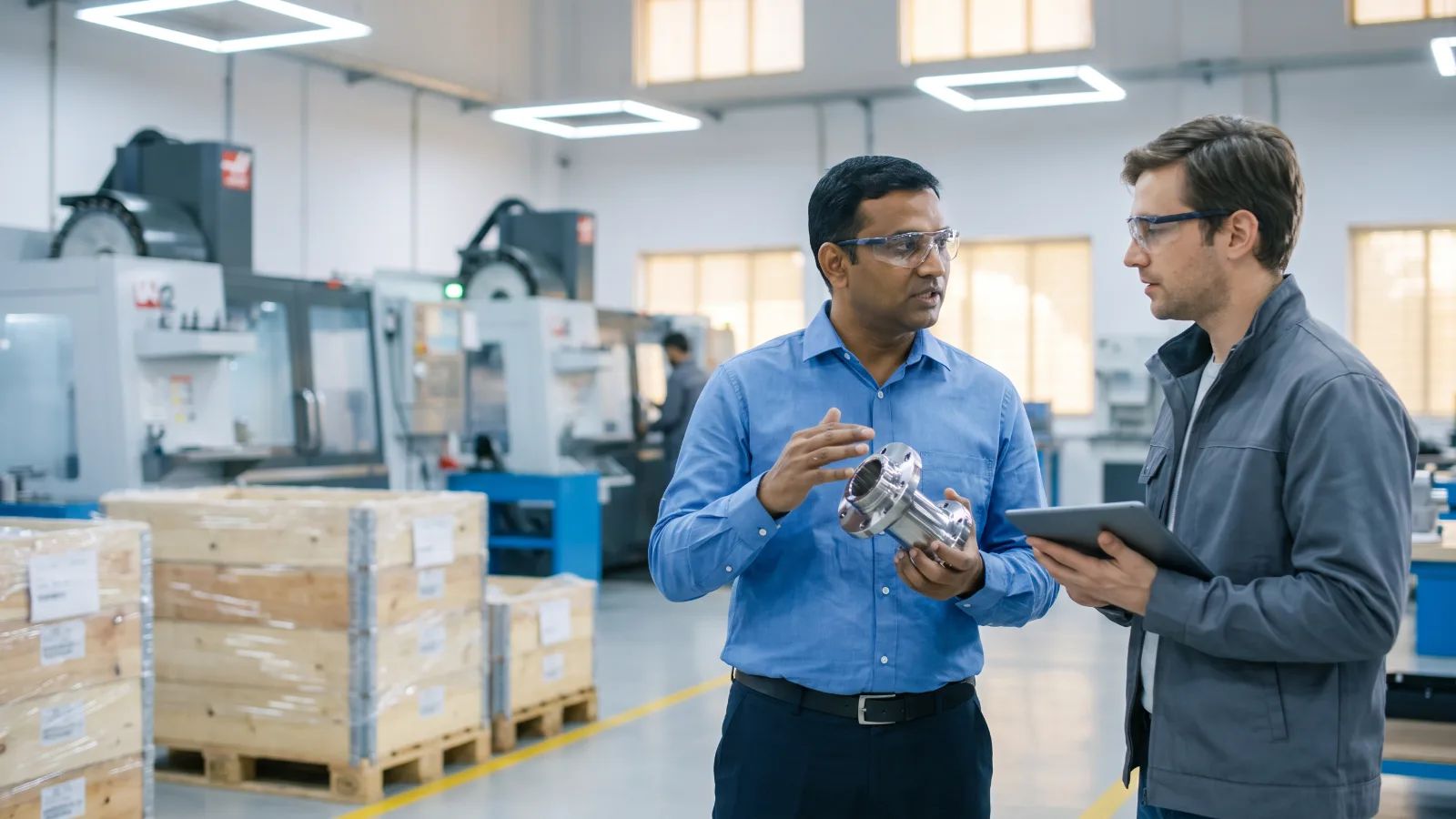
Overseas buyers sourcing from India rarely start with a phone call. They search Google for a product and “manufacturer India”, browse B2B platforms, check LinkedIn and walk trade fairs, then shortlist a few suppliers whose websites prove they can deliver. Many capable Indian factories never make that shortlist, not because their quality is weak but because their online presence does not show it. This guide explains how overseas buyers judge suppliers and what manufacturers can do to attract more genuine export enquiries.
How overseas buyers find and judge suppliers
| Stage | What the buyer does | What you need online |
|---|---|---|
| Discovery | Searches Google, B2B platforms and LinkedIn for the product and process | Product pages written with the technical terms buyers actually use |
| Shortlist | Checks the website for capability, certifications and export history | Capability pages, certifications, plant photos and video |
| Verification | Asks for drawings review, samples, a video audit or references | Fast, technical replies and documentation ready to share |
| Request for quote | Sends drawings, specifications and volumes | An RFQ form that accepts files, with a clear confidentiality promise |
Each stage is a filter. A buyer comparing ten suppliers will drop anyone whose website leaves basic questions unanswered.
Product and capability pages built for buyers abroad
Buyers search in the language of engineering and procurement, not marketing. They look for terms like “investment casting”, “CNC machined components”, “forged flanges”, a material grade or a standard number. Pages that use these terms precisely are the ones that rank and convince.
- One page per product family or process, describing materials, grades, standards followed, size range, tolerances you can hold and typical applications.
- Industries served, such as automotive, pumps and valves, oil and gas, agriculture or aerospace, with the specific requirements you meet for each.
- Capability pages covering your machines, processes, testing equipment and capacity, written factually.
- Downloadable documents such as a capability profile or product catalogue, available without forcing a long form.
Prove you can export
Buyers abroad worry about consistency, documentation and communication more than about price. Show evidence on every relevant page.
- Certifications that matter in your sector, such as ISO 9001, IATF 16949 for automotive or AS9100 for aerospace, with certificate details.
- Your quality process: inspection stages, testing lab, traceability and the reports you supply with each shipment.
- Export experience: the regions you ship to, the types of customers you serve and how you handle packing and documentation.
- Real photos and a short video walkthrough of your plant. Many buyers now accept a recorded or live video tour as a first audit.
Content that reaches buyers early
Engineers and buyers research before they request quotes. Technical articles that answer their questions bring them to your website at that stage. Useful topics include comparisons of manufacturing processes, material selection guides, design tips that reduce machining cost and explanations of inspection standards. Well written technical content also builds the kind of authority that helps your product pages rank, and it is the type of source AI search tools quote when someone asks a sourcing question. Our guide on SEO for the manufacturing industry covers the search side in more depth.
International search basics
- Write in clear, professional English, and use the units and standards your target markets use.
- Create country or language versions only when there is a real difference, such as a local office or a translated catalogue, and set them up correctly so search engines show the right version.
- Make sure the website loads quickly from abroad, which usually means good hosting and a content delivery network.
- Avoid copying the same text across many thin pages for different countries. It rarely ranks and looks careless to buyers.
B2B platforms: use them, do not depend on them
Platforms such as IndiaMART, TradeIndia and Alibaba bring volume, especially for standard products. Keep your profiles complete and reply quickly, but remember that the same enquiry often reaches many suppliers and buyers compare mainly on price. Use the platforms to be found, and use your own website to be chosen.
Handle enquiries like an established exporter
- Reply within one working day, in the buyer’s time zone where possible, with a technical response rather than a generic brochure.
- Offer to sign a confidentiality agreement before receiving drawings.
- Quote clearly, with the Incoterm, payment terms, lead time and packing method stated.
- Verify unfamiliar buyers through their company website, LinkedIn and trade references before sending samples or sensitive information.
- Follow up on a schedule. Many export orders are won on the third or fourth conversation, not the first.
Nuwizo’s view
Indian manufacturers often have world class capability and an online presence that undersells it. The biggest gains usually come from precise product and capability pages, visible proof of quality and fast, technical replies to every enquiry. That is the focus of our marketing for manufacturers, supported by SEO for export markets that targets the searches overseas buyers actually make.
Frequently asked questions
How do overseas buyers find manufacturers in India?
Mostly through Google searches for the product and process, B2B platforms, LinkedIn, trade fairs and referrals. Most of them check the supplier’s website before sending a request for quote.
What should a manufacturer’s website include to get export enquiries?
Detailed product and process pages, materials and standards, capability and quality information, certifications, plant photos and video, export experience and an RFQ form that accepts drawings.
Are B2B portals enough to get export orders?
They help with visibility, especially for standard products, but enquiries are often shared with many suppliers. A strong website and direct relationships usually bring better quality buyers.
How do I avoid fake export enquiries?
Check the buyer’s company website, email domain, LinkedIn presence and trade references before sharing samples, prices or drawings. Be cautious of requests that push for urgent payment of fees or unusual documents.